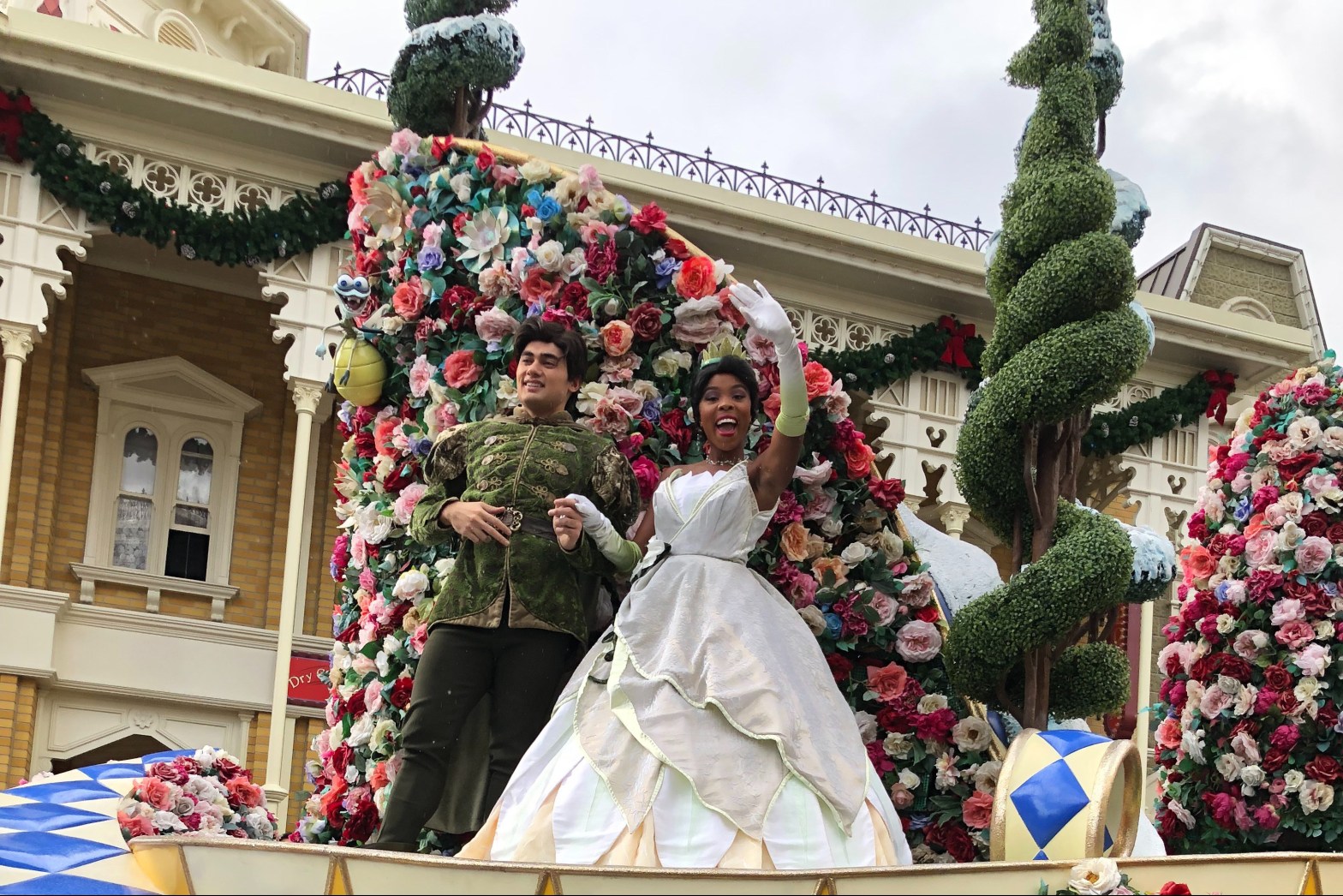
How I learned to stop worrying and love Tiana’s Splash Mountain

I have not been a person historically comfortable with change. I don’t think this makes me particularly unique amongst human beings as we are generally not comfortable with change. But, the mere thought of change has generally sent me into an emotional state and caused such distress that I am unwilling and unable to put into practice the skills that I have learned as a therapist.

As I prepared to enter high school, my parents briefly considered buying a lovely piece of property in a town 35 minutes from the one where I attended high school. They hoped to build their dream home on the banks of a small pond contained in the property.

I became so upset and cried so hard that I refused to even raise my head to look at the property on the times when they would drive there and try to show it to me. I am ashamed to admit that I could not cope with the idea of changing high schools and leaving behind my friends and everything that I knew. I could not imagine how I would manage to make new friends and enjoy experiences different from those that I had long expected to have.

I think that’s the real crux of the fear with change. We know what to expect with the same. We know that even if we are unhappy with the status quo, it is an unhappiness that we can cope with, because we have been coping with it.

The familiar brings comfort and certainty. It brings continuity and certainty.

And yet I love the unexpected and unplanned nature of travel. I love that I don’t know what to expect. That I don’t know if I’ll like everything or that I’ll be comfortable in the places I go. Travel pushes boundaries and it encourages taking chances. Every restaurant is unfamiliar. Even the grocery store is a wonderland of the unanticipated. When things are unknown and new, one is forced to pay attention. To be mindful of the moment and to let go the ideas of past and future. Wholly consumed with the moment’s survival and experience. Travel keeps us present in the here and now in a way that the familiar allows to drift.

My reasons for loving Walt Disney World, then, are completely the opposite of my reasons for loving most other travel. Disney is familiar and constant. It inevitably invokes memories of past visits. The smells in the park remain the same year after year and because our sense of smell is the most immediate trigger of memories, just walking into the park and smelling the hot buttered popcorn, the sugary sweet cookies of the Main Street Confectionary, the musty, faint chlorine tempered with the tar of cannon shot found on Pirates of the Caribbean. All of these scents bring back such strong memories of visits with my family. They are constant and inspire a warmth and continuity that most travel does not allow.

So I understand why the thought of change brings such upset to people who love the parks so much. The announcement that Splash Mountain will be re-themed to tell the story of the Princess and the Frog sent the internet into a spasm of grief and worry. And I understand it. I have strong memories of the first time I rode it with my husband (then my boyfriend) and forcing him to warn me before the drop. Clinging to his hand as we watched the buzzards cackle. Screaming on the way down.

I also remember the Nautilus and 20,000 Leagues under the sea. I remember how amazed I was to see (what I thought was) a fully-functioning submarine in a castle’s back yard. To descend the steps into the dark, close quarters, and to feel it move around UNDER WATER (again, I was small, I had the magic of belief).

Those magical moments were so crystal and clear because they were FIRST experiences of a thing. That’s not to say there aren’t firsts in the fourth or fifth ride, there are. That is the magic of Disney. But over time, much of the joy is in the drifting back or in the connection to the past.

This is why I love change at the parks. Because change forces presence anew. I have to be in the moment on this new ride to take it in and to really notice what is happening in that ride. When Disney is an adventure rather than a comfort.

I’ve written before about one-mindfulness and focusing on the feelings and experiences of the moment. One of the fastest ways to ground oneself in the moment is to check in with the five senses – what can I see, smell, taste, touch, and hear right here right now. New experiences allow us to engage all of the senses without fear that one of them will highjack the moment and mix in the nostalgia and memories of past experiences of that very same sensation. When we engage with the world one-mindfully, we can leave the anxiety and worry about what’s next or what’s past behind.

I realized on the last trip that we took, in the summer – when it wasn’t terribly crowded and we went spur of the moment and therefore had less planned. That those other trips where I’ve gotten up 180 days before traveling to book dining, 60 days before to book fast passes have been driven by focus on what’s next. Maybe this is a foible of mine, but it’s so hard to focus on what IS if I’m worrying that we’ll miss for our FastPass for the Haunted Mansion while waiting in line for Small World. On that summer trip we were able to be in the moment and present with our kids. We weren’t so much focused on what we had done before or what we were scheduled to do next. We wandered.

And it was an adventure.

So this is why I’m looking forward to the re-themed Splash Mountain. Tiana is a wonderful American princess and it is a delight to see her have a home in the parks. The new version of the ride doesn’t remove my memories of what came before (and much of the original experience, for me, will remain – the drop, the slow climb, the water). It will, though, force me to experience it anew. To be present as I ride it. To feel that magic of adventure again.

And also, maybe, there will be beignets in the gift shop.
The me in the shadows.

I think we’re all in the process of building our own narratives at all times. We’re drafting the story of who we are and how we want others to see us. Crafting our image and caring for its upkeep is a full time pre-occupation. Sometimes I wonder if we’re more devoted to what we want others to think we are than to who we actually are – we’re certainly more proud of the version of ourselves we show to others than the one we hide away.

The shadow self – the one we often try to suppress and ignore – sometimes peaks out from time to time. But, I know for me, it’s always a little embarrassing when it does so unexpectedly.

There are times when I’m scared that some of my angry and annoyed reactions are the shadow self (my real self) showing her less than attractive colors and undermining my sense of myself as a good mother. But hating her, that self I hide away and pretend doesn’t exist, doesn’t really help her to be nice when she does come out.

I wonder why we are so afraid to be who we are. I know we’re afraid they won’t like who we really are. Some amorphous they that reflects the judgment and evaluation of those we care most about and even the opinions and estimation of those we only know in passing.

My shadow self, as I call her, is scared and doubts her worth. She feels inadequate and uncertain. Sometimes she feels like an imposter. She’s the little girl striving to please and to be “good”. She worries that she isn’t enough for others and that if she isn’t confident, funny, self-assured, and in control that they won’t want her around. That they won’t love her.

But she’s me and imperfection and self doubt are what let other people love US. The actual us. They’re a way in that the shiny veneer of perfection doesn’t allow.

I remember the first time I apologized to my kids for something I had done that I regretted. I was angry because they were fighting in the back seat when we were driving home from school. I yelled. I’m pretty sure they were scared and upset. I don’t even remember entirely what I said. I was so angry.

And then I realized something. I wasn’t angry. I would have preferred to feel angry. I was actually ashamed. I felt certain that if I was a better mother I wouldn’t have kids who would need to fight over whatever they were fighting about. After the shame came the guilt. A better mother wouldn’t get mad at her kids for pushing her inadequacy button. Would she? Then came the desire to ignore it and hope it went away, the kids – after all, as kids do, had moved on completely after a few minutes of stunned silence.

But I knew that I needed to apologize.

I explained that I was sorry I had gotten angry, but that I was actually angry with me and feeling worried that I had done something that caused them to fight. That my anxiety about whether I had asked too much of them to take piano lessons after school had overwhelmed me. That it was normal to fight with one’s sister.

They accepted my apology with better grace than I usually accept apologies. They offered hugs and reassurances. Kids seem to have an infinite capacity to love their parents, even when their mother is trying desperately to stop from focusing on the the self that she believes is unlovable (usually by making myself into the very thing I fear – unlovable).

My shadow self deserves love. She’s doing her best. Not THE OBJECTIVE best, but her very best. She loves her family and her life, she just sometimes worries that she doesn’t deserve it. She just sometimes worries that it could all slip away. She deserves reassurance because no one should have to experience that fear. It’s terrible.

I’ve tried to incorporate this realization into my work with clients. That they have these shadow selves that they hide, the selves that are their real, fragile, scared humanity. It’s that humanity that needs to be reached and reassured. That needs to be seen and accepted. Incorporated and loved.

It starts with doing it for ourselves. With accepting ourselves and our “worst” parts. Knowing that they are what make us human and real.

Acculturated Minnesotan

Thinking about travel makes me think about the things I have learned from the various places we have lived and visited over the years.

From France, I learned mindfulness and pursuit of pleasure in daily tasks. From England, a sense of tradition and history.

From Northern Minnesota, the peace of waiting for the call of the loon and the pride of self-sufficiency.

From Houston, a dogged will to keep on keeping on and an unflashy acceptance of difference.

The list goes on and on, but each new place that I visit changes me and forces me to adapt to the culture and pace of the people there. It broadens my worldview and deepens my understanding of myself and of how different I am from others.

Acculturation is a process by which an individual adapts to, and adopts, a new cultural environment. It’s at once a social, psychological, and behavioral change that allows one to fit into their new environment and to carry a piece of that environment with them as they go.

Sometimes that acculturation process can be a negative, when one loses sight of their own moral and personal values in order to conform. But acculturation is not, or should not be, conformity. It’s adaptation and incorporation. But it should not require one to sacrifice who they are at their core, even as they adopt different styles or points of view.

Acculturation is a learning and a growth and while growth can change a person, it should be seen as adding and deepening personality and life, rather than something to be feared.

This is a thing that travel allows – it allows one to look at themselves from an the perspective of an outsider. To consider what they want to see and do and accept differently than they have and to also observe that which they love about themselves.

I am a Minnesotan. I was raised to weather the harsh winter and to revel in the crisp damp air of the fall. I was taught to be nice, even at the expense of being right. To appreciate a good casserole, a warm fire and a bubbling hot tub by a snowy lakeshore.

I could not wait to leave when I was 18.

Now that I have been gone a while and have acculturated to new places I can see Minnesota and myself there through the eyes of an outsider. I can see how nice can prevent honest, can deny problems and avoid blame even where blame is useful and due. It papers over cracks and deep seated injustices. From the perspective of a Houstonian, where the lack of zoning pushes poverty up against wealth, I can see the Minnesota control can hide economic crisis and prevent many from seeing that which is truly going wrong. I can see how sheltered I was from any kind of examination of the privilege that came with my life there.

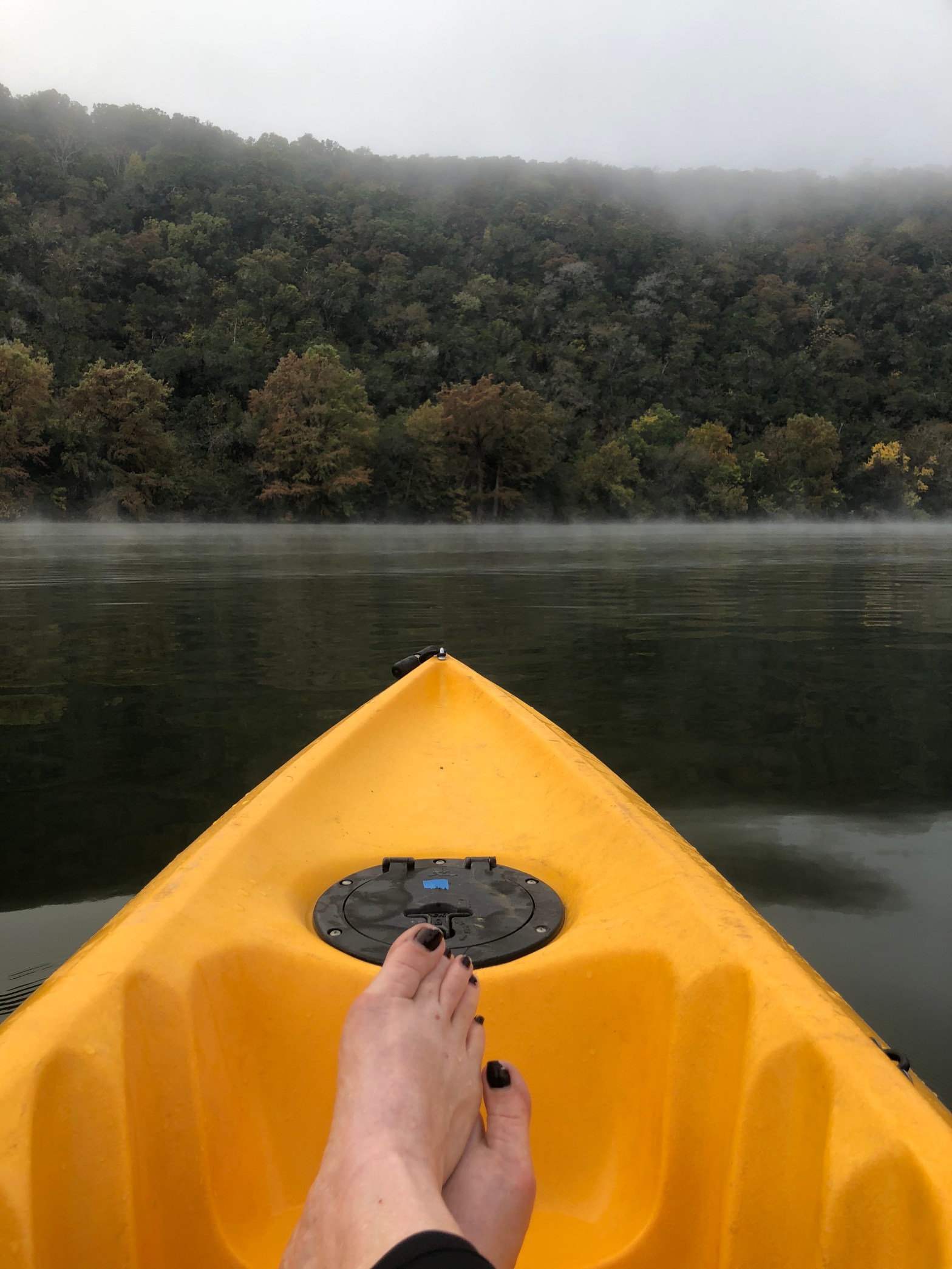
I can also see how much it made me appreciate the natural beauty of the world and the calmness that comes from a paddle dipping into the still waters of an early morning lake. Minnesota taught me to keep on with things and to find a way.

The Flâneur

I have spent a great deal of time over the past several months thinking about travel. Longing for travel. Cancelling planned travel. Planning more travel. Cancelling that travel.

Something about not being able to leave one’s home makes one absolutely desperate to, well, leave one’s home.

I’m incredibly fortunate to have this be a source of focus and thought, I am absolutely aware that there are people losing their jobs and their health. I am lucky to have experiences of travel that I can look back on to miss and fortunate to be able to look forward to future travel.

Even dreaming of travel, imagining travel, brainstorming about travel is an opportunity for a mental break during the day. One that I have taken in the form of travel documentaries and research of possible future trips. Or even just tirelessly combing airbnb and vrbo for alternative places we could shelter in place over the next months.

Travel has, though, quite literally saved my mental health in the past.

I spent one summer in Paris during law school. I felt broken, emotionally, from a thing that happened just before I left Washington to take up a position with a French law firm for the summer. Paris is a city accepting of the solitary and that summer I was.

Flâneur is a French term for “one who strolls.” It has traditionally referred to a French gentleman of the belle époque who would casually and fabulously stroll and wander the grand boulevards of the city. A flâneur is an urban explorer, a connoisseur of the street. For that summer. I engaged in acts of Flânerie all across the city. Distracted from unhappy thoughts by the beauty of the buildings and the people around me. I wandered streets, often lost and uncaring of when or how I might find my way back to my apartment. In walking I burned off nervous energy, I tired my body so my mind was forced to rest at night. I watched others engage in lives and relationships from the outside and remembered how it felt to connect with others in a happy and safe way.

I engaged in focused and attentive eating in cafes and restaurants – alone because I knew no one in the city and also because I felt unable to brave the possibilities and – in my head that summer – dangers, that come with reaching out to others. I learned to taste every bite and to slow down, to pay attention to my food in that way that seems the French do instinctively.

I learned new skills in my job and focused myself on a new area of law that I had not considered in the past. My french improved – as it will do when one is forced to speak it daily in a professional setting. I began to form relationships and to feel more like myself from before.

Travel forced me to engage in the kind of mental health self care that I spend most sessions trying to encourage my clients to attempt. When one is in a new place, one has to look around, almost everyone ends up walking when traveling, in trying new foods one is forced to slow and focus, if only to comprehend what one is eating. Life is simpler and time flows in a different rhythm without worry about getting all daily tasks accomplished.

Travel is a way to both rest and inspire. To slow and to focus. Travel concentrates the mind of well-being and happiness in a way that feels indulgent in every day life. Only when on vacation do we allow ourselves to inquire “what do I WANT to do today.”

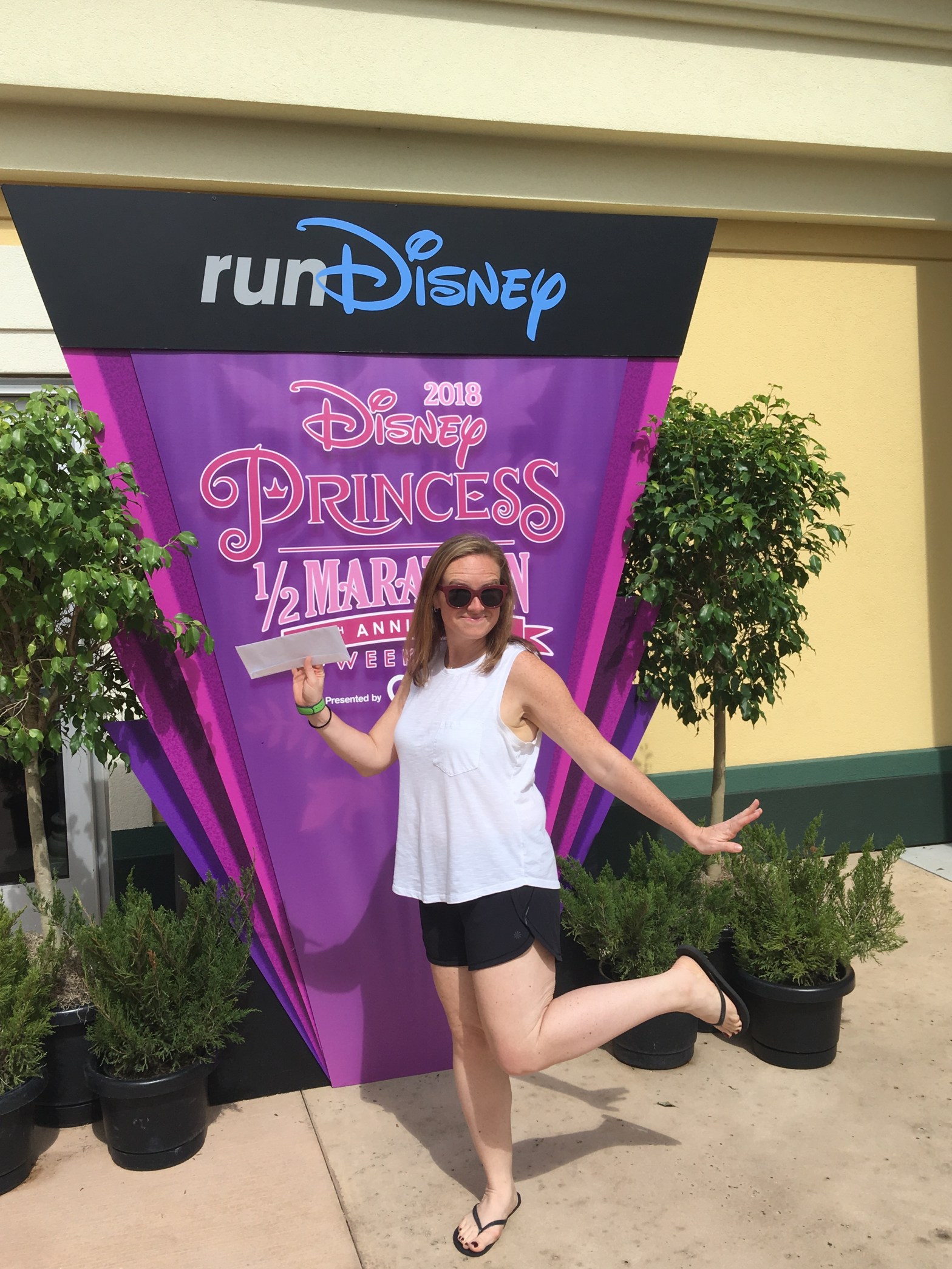
Travel encourages us to take steps today to prepare for tomorrow’s joy. To take action towards a goal that we want to achieve. It was the goal of travel to Disney World that pushed me through the training for my first half marathon. It is both reward and opportunity.

Travel can open our eyes to what we have in our lives already – gratitude – and to other ways of living and pursuing happiness – understanding, enlightenment.

So anyway, I’ve been thinking about travel and probably (definitely) romanticizing it as absence has made my heart grow fonder of it, but I do look forward to the day when we can all get back out there to the wider world and am working to bring that travel spirit into my quarantine by asking myself “what do I WANT to do today” rather than the more common “what SHOULD I do today”.

Petunia and Lily

I have saved things that I have written over the last few months and not published them because I was worried that they are not the right things to say or that people will judge me for my feelings about what’s happened. Who am I to think that I have valuable thoughts about cancel culture or speech or class or politics?

I admire people who tweet and write and produce content because they seem to have some intrinsic belief in themselves and that what they say matters. I have a deep seated belief that what I have to say is obvious and not additive in any way.

But I have to stop doing that. Stop believing that my perspective is not valuable or true. Stop worrying that I will say the wrong thing because I AM wrong. I work so hard to tell my kids that when they make mistakes they might have done something bad but THEY ARE NOT bad themselves. I don’t like the behavior, but the person I love.

I might say the wrong thing because we all say the wrong thing, or fail to communicate effectively or DO bad things. But I do not believe that I AM BAD. I have to believe I’m a good person or there is not much point in trying to do better. There’s no way to really change and grow because I’m already bad so it can’t be fixed.

This is not to say that there are no consequences for doing bad. If I say something offensive or hurtful there are consequences in that it affects how others see me and how they feel about me. Whether they choose to be in relationship with me.

And that is scary.

That is the true power that every individual has – the choice of whether to be in relationship with another person or organization.

Speech is free but it has consequences.

Always.

I firmly believe that each individual can say anything that they want. They can use the most hurtful and offensive language and no one can stop them. That is their right. It is MY RIGHT to stop being in relationship with them or to feel differently about them or to not buy their product. That is not shutting down speech or stopping free expression. It is consequences.

Speech is free but it is NOT without consequences.

I realized this when I read about JK Rowling denying the femininity of transwomen. Do I wish she would not choose to say that? That she would not use her enormous platform to deny who people are? Yes. OF course. But it’s her right to react to her trauma in a way that feels helpful and purposeful to her. To say what she wants.

But there are consequences and part of the freedom to say what you want must be a willingness to bear the consequences of that speech. For JK, one of the consequences is that she hurt fans deeply. She’s allowed to do that. She has to accept that she did that as a consequence of saying what she wants.

For me, the consequence is that I know read her books differently. I always thought that one of the fundamental tragedies of the Harry Potter series was that the fear of the muggle community (of which I suppose I am a member since there was no letter in my mailbox when I was 11) was that we had to live in a world without magic that we get to see and experience. Magic is wonderful, even if you can’t wield it, but it’s also powerful and scary. Difference can be scary. Trauma is scary.

The price of fear, in the Harry Potter world, though is loss. The muggle community feared magic used against them and that meant they lost the ability to see and experience it. Voldemort feared death and therefore lost the ability to really live. I read that as a sad thing in the books. That it was sad that the magical community needed to hide itself away to protect itself. Yes, it was evidence of trauma, but it resulted in a smaller more insular magical world and a smaller, less fabulous muggle world.

I always felt sorry for Petunia Dursley because she pushed away that which could have opened her world to love and wonder. She pushed away a sister who loved her and could have shown her magic if only she could have let go of her fear and jealousy. Her need to be just as special in exactly the same ways (rather than finding her own ways to be special and realizing that special is not a zero sum thing).

Reading what JK tweeted and then wrote in her longer explanation of her thoughts about transwomen. I heard her saying that hiding and boundaries in response to trauma are positive and good. I heard her talking about real and painful trauma and I am so sad that she experienced what she did. She has every right to want to feel special and unique and to believe that to be a woman is a source of power not weakness.

She has a right to say what she believes.

But the consequences of her speech are that it changes how I read her work. How I feel about her work. I can’t help but read her work telling me now that it was ok for Petunia to push Lily away because she needed to feel better about herself by keeping away a person that loved her, because Petunia needed to feel that being a muggle was special and good. That a thing I read as a tragedy was the very thing that Rowling is believes is justified and fair.

As a muggle I don’t feel strength in living without magic, it’s sadness. I think every child that ever read the books and wished they could go to Hogwarts was wishing for a world with magic. That’s why the books are so beloved – they imagine a world with magic.

I’m sad for JK that she doesn’t see a world with magic. In the books Magic is synonymous with love and adventure. In the books, those who are different are celebrated. Those who challenge tradition are admired. Hermione Granger looked at difference as a source of wonder and sought to understand how all living things can identify with each other and with each other’s struggles – her unceasing efforts to treat the house elves as equals springs to mind. I always thought of JK as a Hermione – documenting and welcoming new comers into this magical world. Wondering with us at its charms.

I always loved that Hermione and Luna Lovegood taught us that we don’t have to be like everyone else. And, more importantly, that we should not see other people’s specialness as a loss of our own. Hermione and Luna never looked at Harry’s status as the chosen one as diminishing their own specialness. Building walls and deciding who does and does not belong is not a trait that Hermione and Luna share, but it is one that JK Rowling has espoused.

It is heartbreaking to me to discover that all along JK Rowling was telling us that she identifies more with Petunia Dursley than she does with Hermione Granger.

Jasmine

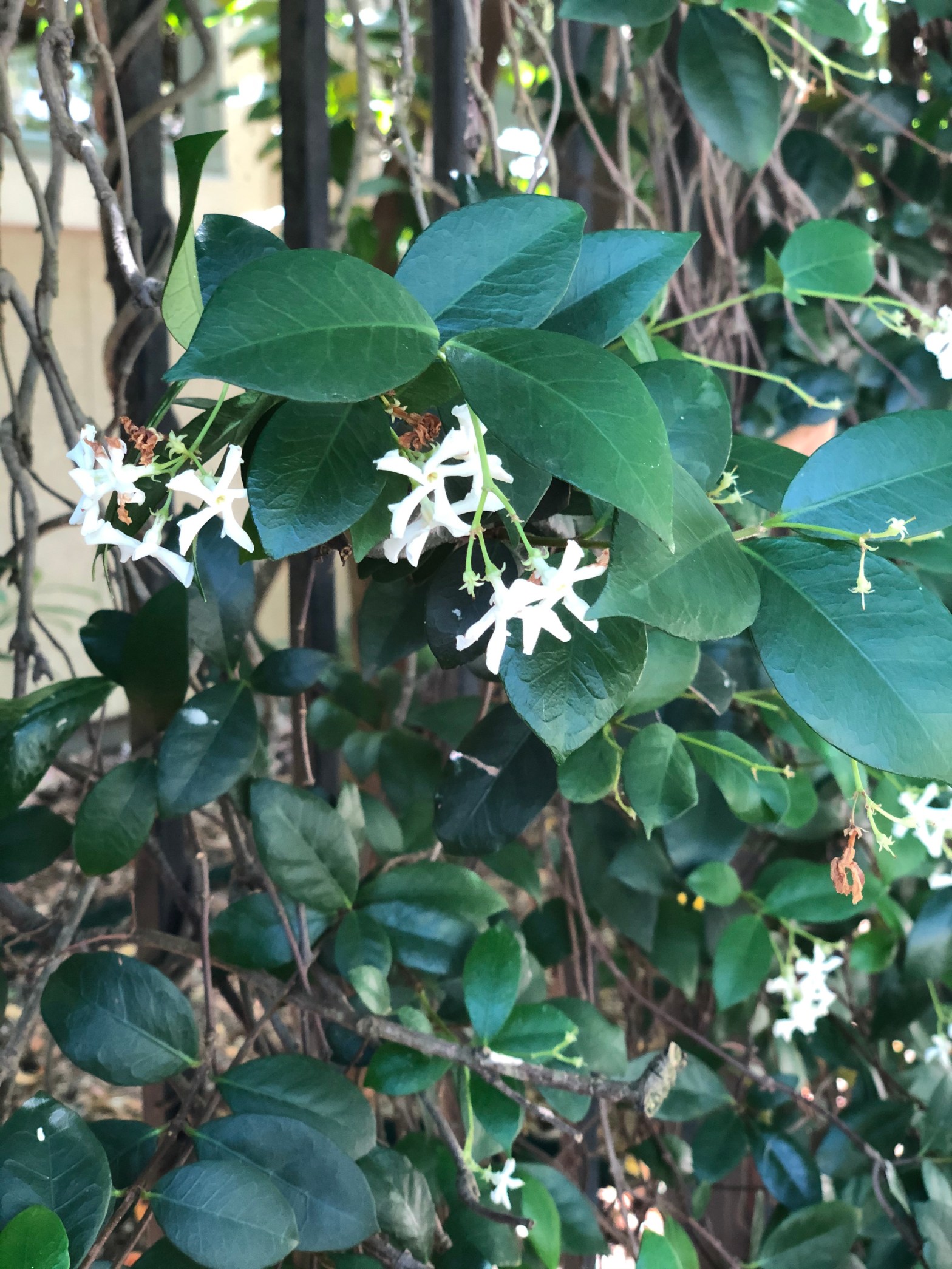
My memories of this period of quarantine in the face of an out of control pandemic will probably always be triggered by the scent of jasmine.

I have run every single day, some days the run has been more of a walk interspersed with moments of jogging. Some days the run has been only accomplished through an extreme act of will. A dogged determination to practice some form of self care so as not to lose my mind and all sense of accomplishment as one day runs into the next.

In Texas, this period began in the best time of year for running, when the jasmine planted on every fence along every neighborhood street blooms bright and lovely and blankets the sidewalks in the sweet scent of springtime.

I always felt lucky to be able to run in a place that was not snowbound, as my home state of Minnesota was at the start of quarantine, and which had such a lovely scent to drag me forward on my runs.

Of course now Minnesota is no longer homebound, but rather is in the midst of a glorious summer – while Texas swelters on in the longest stretch of days where the temperature never drops below 80 degrees since records have been kept. These days the runs are harder to start and even worse to continue.

But I have continued. I think it’s to remind myself and my body that we will not be stuck in this one place for ever. To get outside and to look at things in natural light – without the tempering influence of glass – is almost as good as any antidepressant on the market today. It can alter the chemistry of the brain – or so I remind myself when I slam into the wall of humidity waiting outside my front door each morning.

Failure

I’m a failure. I failed at my goal to write every day. It got difficult to think of things to write. I felt like I wasn’t writing anything worth reading. I felt like an imposter. Who am I to hold myself out as an expert? To think that I might have anything to add to the conversation about mental health.

This is why I admire artists and writers and even social media influencers, they believe they have something worth hearing to say. They believe that others will want to know what they think or feel or believe.

It’s so hard for me to believe that. Actually, I don’t need to believe that, I need to decide that I’m speaking for me. I’m writing for me. Because the thing I am writing is meaningful. TO ME.

I feel so lonely because I always worry that others don’t want to hear what I have to say. That I’m imposing or annoying or frustrating or, or, or, or. I’m always so scared of saying the wrong thing that I never give myself the chance to say the right thing!

So I failed. Because I tried too hard to be perfect and to be meaningful. But I’m trying again and this time it might be a little less meaningful, it might be a little less polished, and it might be way more frustrating or angering or wrong.

But I promise that it will mean something to me.

Birthday

Today is my birthday. It is also the second anniversary of the burial of my Grandmother, which happened to occur on what would have been her 90th birthday. I will always think about her on my birthday because it was always her birthday first. A thing I was lucky enough to share with her. She told me I was her birthday present and I genuinely saw myself that way when I was younger.

She was at once both a shining example of the tough, stoic farm woman so common in the small towns of the midwest and a soft, artistic soul. We have a number of her paintings hanging in our house – she painted both what she knew and also what she saw in her travels. From run-down country barns to ocean waves, she had a beautiful knack for capturing scenes and colors. Toward the end of her life, her talents focused almost exclusively on wooden angels for church sales and Christmas trees. We have an extensive collection on for our own tree.

I think about her and women like her when I think about what it means to be a woman, a wife, and a mother. She definitely deferred to my grandfather in a way that would feel uncomfortable and unnatural in my own marriage. But she was loved by him in a way that was true and supportive. Looking at their relationship now, I know they were equals even as she outwardly deferred to what he wanted. He always wanted desperately to please her and make her happy. He converted to Catholicism for her and remained a catholic even after her death – singing in the choir and centering their family life in the church, which is a big deal in a small, Lutheran dominated Minnesota farming community.

My grandmother’s life reminds me that its not weak to acquiesce to my partner’s needs and wishes from time to time and reminds me to really see all of the ways that he does the same for me.

My grandmother had an adventurous spirit and loved to travel, but lived her whole life on the outskirts of a small town. She built a community of friends and family and raised five children on a farm. She may have enjoyed life in a bigger city, it’s hard to know as she never said. She laughed often and was content and comfortable with her life and where she was. It’s a good reminder that the trappings of life are just extras. They’re wonderful and I’m grateful for every single one of them, but they’re EXTRA. The point is the people around me and the relationships I’ve formed with the people close to me.

So I think about her and it reminds me to be grateful today on my birthday. To absorb the love that others offer to me and to store it for the more difficult days when I don’t feel it as much. To offer myself some love and to just focus on the things that make me happy on this day of all days.

Thank you

Thank you is such a simple phrase and also one that is so hard to say. At the moment the Dancer is struggling through her interminable thank you note project following her birthday party. She’s grateful for the gifts, of course, but the process of writing the notes has been painful for everyone involved.

Thank you is often difficult to say in response to a compliment too. I often have to fight the urge to deflect or minimize the thing being complimented. Oh, this dress, you like it? I’m just never sure if it’s flattering on me. It can make the compliment so much more powerful when I’m able to just say thank you. To take in the thing that the other person has found worthy of praise and see it that way myself.

I used to think it was a worry about seeming vain or self important that stopped me from just accepting them. But now, I think it might actually be vulnerability that I’m worried about. It feels exposed to accept praise, it feels like we’re seen. This is true with gifts as well, it feels very much on display to get gifts. I always feel somewhat uncomfortable and embarrassed – to be seen as meriting a gift is uncomfortable for someone who doubts their own value and worth all the time.

Then there is the thank you to be offered when one receives help. Those are both easy and terribly difficult. It’s easy to feel the gratitude for the assistance needed, but so hard to acknowledge that we needed the help to begin with. In that case, the asking is almost more difficult than the acknowledging.

In all of these cases its acknowledging the role that other people play in our lives – fundamental and invaluable. I think we would love to believe that we are islands, independent of others. Happy for their company and enjoying their connection, but able to function on our own. Unfortunately for the island livers out there, this has been proven not to be true. When we are deprived of human connection we become depressed or anxious or experience a break down of our mental health and feelings of well-being. We need people. It’s not weak or needy to need people. It’s human. We’re pack animals by nature.

But acknowledging our place and role in the pack can be hard. It can be uncomfortable. It can even be unappreciated by the other members (the Dancer made the case for skipping the thank you notes because she’s been told by her friends that they don’t read them). But the thank you is as much for us as it is for others. It’s a way of acknowledging the need and the need met. It’s a way of taking it in and feeling the value and the positive glow of it.

Regardless, thank you is a thing I’m working to add to my daily life – the acknowledgement to myself and to others that I’m grateful. That I’m worthy of connection and praise.

Runaway train

I feel some pretty deep ambivalence lately about our level of activity and plans. I love how busy and engaged my kids are and, for the most part (hello piano) we’ve let them pick their own activities and pursue any of their interests that they’re willing to work for.

But it comes at the expense of us having freedom to do things we might enjoy on the weekend. It comes at the expense of traveling or taking a true break together.

Number 71 is playing club soccer, which means she’s on the field almost every day of the week, including the weekend. She’s also playing softball, thankfully a lower-level commitment but one which still involves time on the field on the two days a week we DON’T have soccer. That’s a practice or a game 7 days a week every single week of the fall and the spring.

The Dancer, if possible, has a worse schedule. Between dance at her studio, dance for the competition team, and dance/acting/singing at the downtown theater academy attached to the main performance space in town, she’s dancing or performing 4-5 hours a day six days a week. Again, she loves it. It was her choice and I love that she’s so focused and dedicated to her craft.

But in the last week and a half my husband has forgotten where she was a grand total of 5 times. He flat out thought she was one place, drove there to pick her up, only to find she was another place.

I run a taxi service in the afternoons, driving from 2:45 until about 6:30 and then heading out again at 8-9 for second pick ups.

We’re so lucky to be able to offer all of these opportunities to our kids and to watch them thrive as they pursue them. But it’s all making the days and weeks move too fast. I used to laugh when my parents would claim that time speeds up as we age, but now I’m feeling it. It feels like we’re missing it even though we’re there for almost every second (or one of us is). It feels like we’re on a runaway train to graduation and all I want to do is pull the breaks a bit.

When they were toddlers I thought they would never ever ever get to the point where I wouldn’t have to watch them every second to make sure they didn’t manage to impale themselves on the coffee table or take a header down the stairs. Now it seems like they’ll be driving away for a date with a person I’ve never met tomorrow morning.

It’s hard to stay present in the moment on that train. To see the trees going by when all you can think about is how blurry they are and how that means the train is going faster than seems safe.

I know what I would tell a client here, to shift their thinking about allowing themselves to add a thought to the narrative “I don’t have to think about that now.” But for it to work I need to repeat the process OVER AND OVER AND OVER AND OVER AND Oh no! Someone’s late for practice!

So, to my clients, to whom I offer such wisdom in a calm and easy manner in a controlled setting, please know that I realize how hard it is in reality. How crazy impossible it feels not to think about the future, now. Not to focus on the past, now. To allow yourself to focus only on the now, now. I promise, I’ll keep trying just as hard as you do and I’ll experience success and failure just like you.

If only I could remember where exactly my oldest daughter is and when she needs to be picked up.